

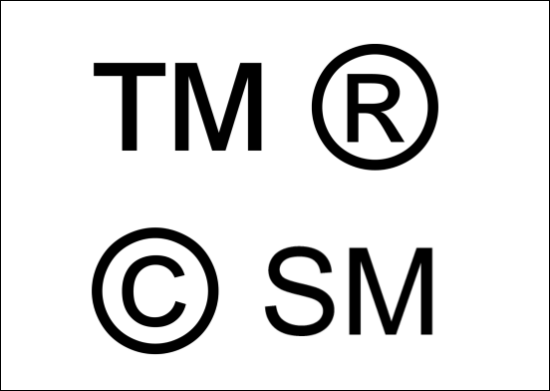
Copyright protection in India arises automatically the moment an original literary, dramatic, musical or artistic work, or a cinematograph film or sound recording, is created and fixed in a tangible form. Unlike a trademark or a patent, no registration is required to bring a copyright into existence. Yet every year, thousands of authors, publishers, software companies, and businesses apply to register their works with the Copyright Office in India. Why bother with a formality the law does not strictly require? This article explains what copyright registration actually does, how the process works, and where applicants commonly go wrong.
Copyright Exists Without Registration – So Why Register?
Under the Copyright Act, 1957, copyright subsists in a qualifying work from the moment it is created, provided the work is original and expressed in a tangible or fixed form. Registration does not create the right; it merely records it. A certificate of registration, along with the entries in the Register of Copyrights, is treated by courts as prima facie evidence of the particulars entered in it, including authorship and date of creation. This can materially shorten the evidentiary burden on the owner in an infringement suit or a criminal complaint, who would otherwise have to independently prove authorship and the date of creation, often years after the fact. It also creates a clear public record that deters would-be infringers, and is frequently required by licensees, franchisors, and even some e-commerce and social media platforms before they will act on a takedown request.
What Can Be Registered
The Copyright Act recognises several classes of works, and applicants commonly register literary works (including books, articles, computer programs, and website content), dramatic and musical works, artistic works (including logos, illustrations, and architectural drawings), cinematograph films, and sound recordings. A logo or label used as a trade mark can often be registered both as an artistic work under copyright law and separately as a trademark, and businesses frequently do both, since the two forms of protection serve different purposes and run for different durations.
The Registration Procedure
Applications are filed with the Copyright Office, which functions under the Department for Promotion of Industry and Internal Trade, Ministry of Commerce and Industry, largely through the Office’s e-filing portal. The process broadly follows these stages:
- Filing: The applicant files the prescribed form with particulars of the work, details of the author and the person claiming ownership (if different from the author), and, where applicable, details of any assignment of rights, along with a copy of the work itself.
- Diary number and waiting period: The application is given a diary number, after which the Copyright Rules prescribe a waiting period, ordinarily around thirty days, during which any person may object to the registration.
- Examination: If no objection is received, an examiner reviews the application for discrepancies, such as an incomplete ownership chain or similarity with an existing registered work (particularly relevant for artistic works and logos), and communicates any queries to the applicant for a response.
- Objections, if any: Where an objection is filed during the waiting period, both parties are usually given a hearing before the Registrar of Copyrights, who then decides whether to proceed with registration.
- Registration: Once the examiner is satisfied and any objections are resolved, the work is entered in the Register of Copyrights and a certificate of registration is issued.
How Long Does It Take?
In a straightforward case with no discrepancies and no third-party objection, registration can be completed in a few months from filing. In practice, timelines vary considerably depending on the backlog at the Copyright Office, the class of work, and whether objections or discrepancies arise. Applicants for software and other literary works involving detailed ownership documentation should budget for a longer runway than a simple artistic work such as a logo.
Common Pitfalls
- Incomplete or inconsistent ownership chain: Where a work is created by an employee, freelancer, or agency, the application must correctly reflect authorship and how the applicant came to own the rights, typically through an assignment. A missing or poorly worded assignment deed is one of the most common causes of delay.
- Confusing authorship and ownership: The creator of a work is not always its legal owner. For works made in the course of employment, or certain commissioned works, ownership may vest in the employer or commissioning party by operation of law, but this needs to be correctly stated and, where relevant, documented.
- Filing for works that closely resemble existing registrations: For logos and other artistic works, the Copyright Office will raise a query if the work appears deceptively similar to an already registered work. A preliminary search before filing can avoid an avoidable objection.
- Treating registration as a substitute for good practice: Registration protects the work as expressed; it does not, by itself, prevent independent creation of a similar work by someone who did not copy the original. Owners should still use appropriate notices and retain drafts and correspondence as evidence of creation, quite apart from the registration certificate.
- Waiting until a dispute is already brewing: Businesses that delay registration until infringement is anticipated lose the benefit of a clean, contemporaneous record. It is far better to register important works, logos, software, and key content well before any dispute arises.
Registration and Enforcement
A registered copyright does not, on its own, guarantee success in an infringement action, but it materially strengthens the owner’s position. Indian courts routinely grant interim injunctions in copyright matters where the plaintiff shows a prima facie case, and a registration certificate is often the quickest way to establish ownership and the date from which rights are claimed. Registration is also relevant in criminal complaints under the Act, and when dealing with online platforms, many of which ask for proof of ownership before acting on a takedown complaint.
Frequently Asked Questions
Is copyright registration compulsory in India? No. Copyright subsists automatically on creation of an original work; registration is optional but strongly recommended for works of commercial value.
Can I register a work that is already published or in commercial use? Yes, registration can be sought for both published and unpublished works, and there is no bar on registering a work already in use.
How long does copyright protection last? This depends on the category of work, with different terms prescribed for literary, artistic, and musical works as against sound recordings and films. Confirm the term applicable to your specific category rather than assume a single uniform rule.
Can software be registered as a copyright? Yes. Computer programs are treated as literary works and are commonly registered, usually with source code (often in redacted form) filed with the application.
What happens if someone objects to my application? The Registrar of Copyrights typically calls for a hearing where both sides present their case before a decision is taken.
Practical Takeaways
For businesses and creators alike, the sensible approach is to treat copyright registration as routine IP hygiene rather than a reactive step taken only once a dispute has surfaced. Key works, brand logos, packaging, software, and creative content central to the business are worth registering early, with a clean and well-documented ownership chain. Doing so before a dispute arises, rather than during one, is what allows registration to deliver its real value: a clear, credible, and contemporaneous record of ownership that can be relied upon if and when enforcement becomes necessary.
By Sevenelementz Legal Associates LLP, Advocates & IP Attorneys, Chennai.
Disclaimer: This article is intended for general informational purposes only and does not constitute legal advice. Laws and their interpretation may change, and individual circumstances vary. For advice specific to your situation, please consult Sevenelementz Legal Associates LLP or another qualified advocate.